
The Evolution of London's Blue Plaques
How did they start? Why are they not all blue? Who decides who gets one? And what are the most unusual blue plaques in London?

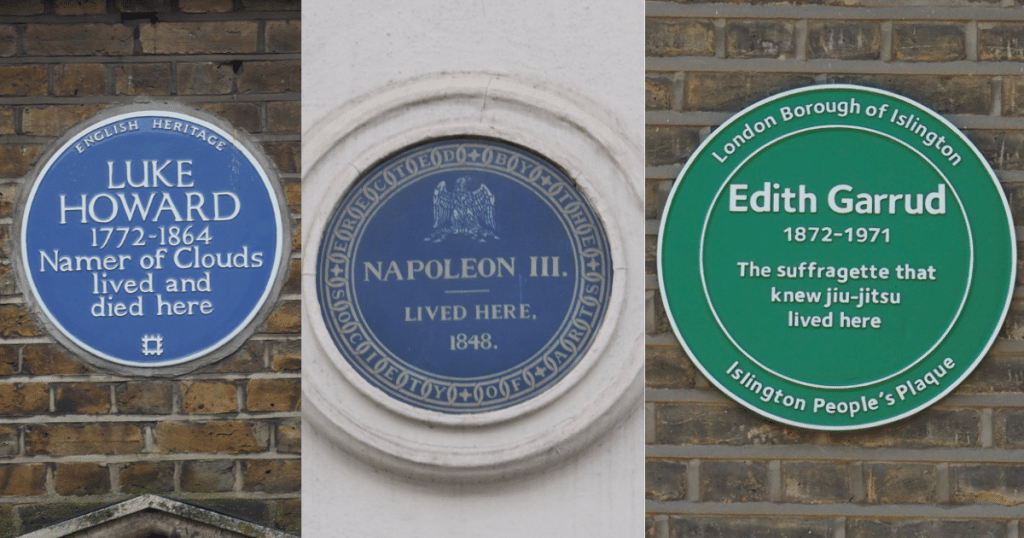
One of the easiest ways to start learning about London’s history is to look out for blue plaques.
In this week’s post, I’m taking you through the history of the London’s blue (and other coloured!) plaques (the oldest and most extensive scheme in the world!)
Short and snappy, they’re a springboard for the curious to go and do more digging once their interest is piqued.
(You can read the full post after this short message)
Spring & Summer Walking Tour Dates
(Click on the walk names to book)
Saturday 13 June, 11am - Fleet Street Secrets - SOLD OUTSaturday 13 June, 2pm - City: Power and Sacrifice - SOLD OUT
Sunday 21 June, 11am - The Spirit of Spitalfields - 1 spot left
Sunday 21 June, 2pm - Feminist Jack the Ripper - 6 spots left
Friday 26 June, 11am - Wapping: Pioneers and Pirates - 1 spot leftSaturday 27 June, 11am - Smithfield: Guts and Glory - SOLD OUTSaturday 27 June, 2pm - City Secret Gardens - SOLD OUT
Saturday 4 July, 11am - Sinful Seven Dials - SOLD OUTSaturday 4 July, 2pm - Belgravia: Behind the Facades - SOLD OUT
Friday 10 July, 10.30am - Women in the National Gallery - 1 spot left
Sunday 12 July, 11am - Sordid Soho - SOLD OUTSunday 12 July, 2pm - Quirky Bloomsbury - SOLD OUT
Saturday 18 July, 11am - Kings Cross: Wrong Side of the Tracks - 1 spot leftSaturday 18 July, 2pm - Hidden Wonders of Waterloo - SOLD OUT
Saturday 25 July, 11am - Bermondsey: Off the Beaten Track - 3 spots left
Saturday 25 July, 2pm - Bankside Behaving Badly
Friday 31 July, 11am - Smithfield: Guts and Glory - SOLD OUT
Friday 31 July, 2pm - Feminist Jack the Ripper - 1 spot left
Sunday 2 August, 11am - Tale of Two Deptfords - SOLD OUTSunday 2 August, 2pm - Wapping: Pioneers and Pirates - SOLD OUT
The Evolution of Blue Plaques
Whenever I stop to think about it, blue plaques are truly amazing.
Although they began in London, now anyone who looks up all over the UK is treated to a clue about extraordinary contributions from former residents.
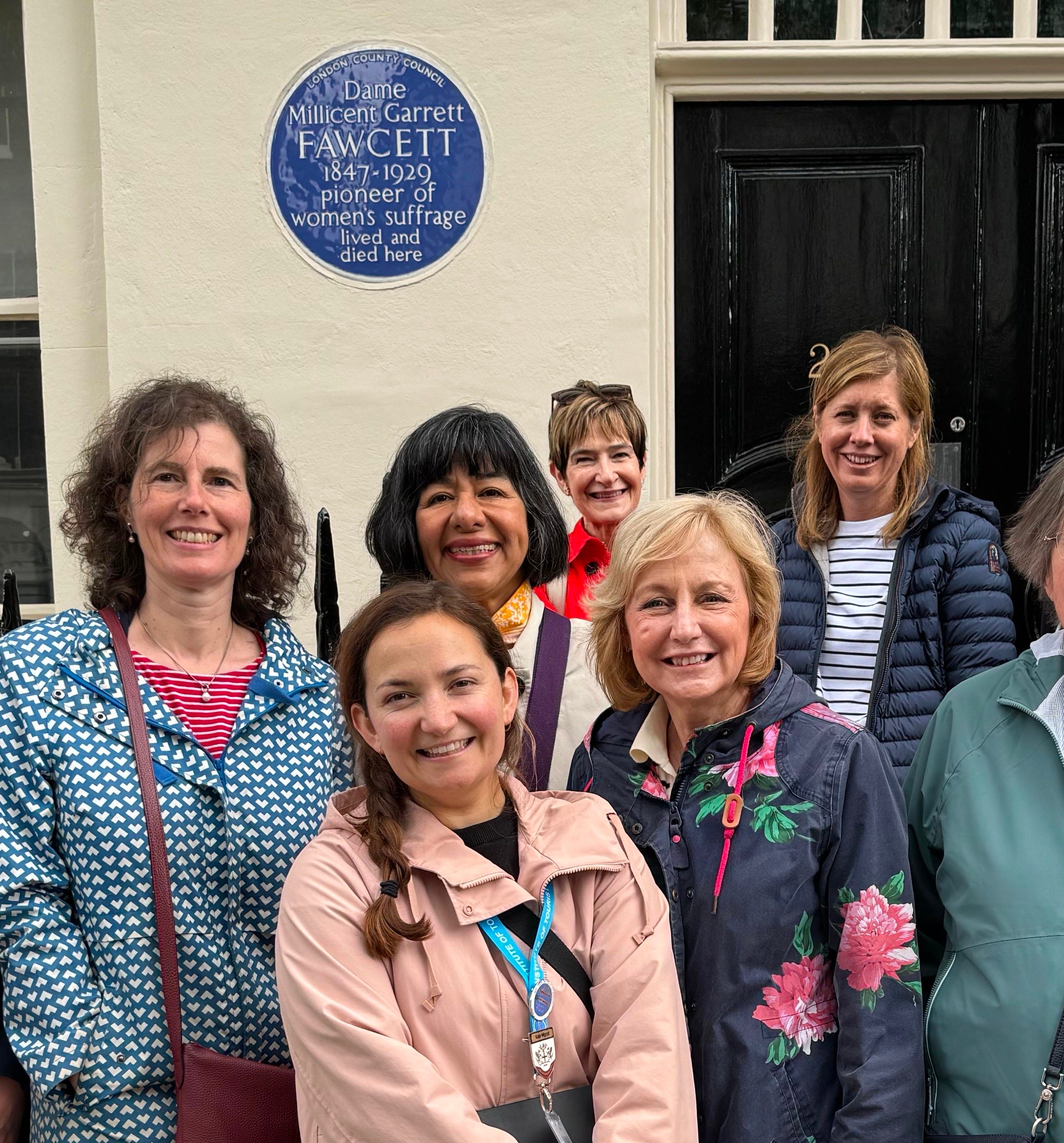
But whose idea was it?
Along the stuccoed terraces of Belgravia, at 16 Eaton Place you can find a small blue plaque for William Ewart (1798-1869).
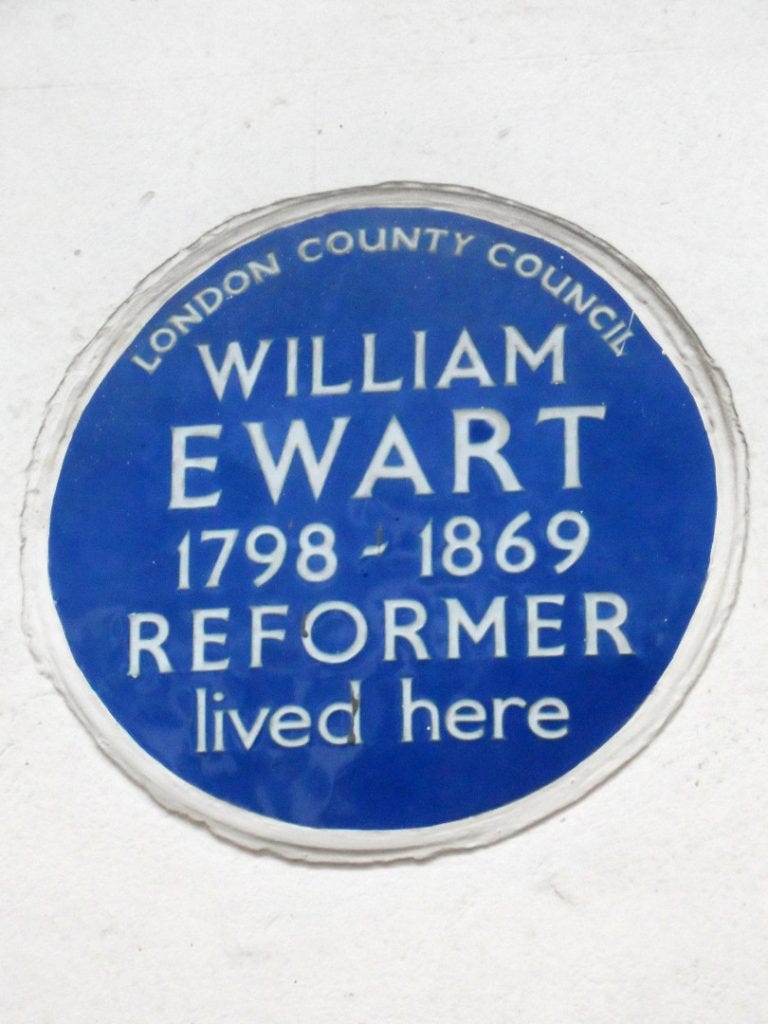
A politician and reformer, what this plaque doesn’t tell you is that the idea for blue plaques came from him!
I doubt that when William stood up in the House of Commons on 17 July 1863 anyone predicted the legacy his words would have.
Might it be practical, William posed, “to have inscribed on those houses in London which been inhabited by celebrated persons, the names of such persons.”?
He continued to give possible examples of “how rich the metropolis was in such associations” including John Milton at 19 York Street Westminster, Isaac Newton and Joshua Reynolds off Leicester Square and Dr Johnson in Gough Square.
He concluded that “other nations were in the habit of preserving memorial of their great men” and London should too.
What a great idea, right? But who could make it a reality…
The Society of Arts
Someone who was paying attention was Sir Henry Cole, first Director of the Victoria and Albert Museum and the co-organiser of the Great Exhibition of 1851.
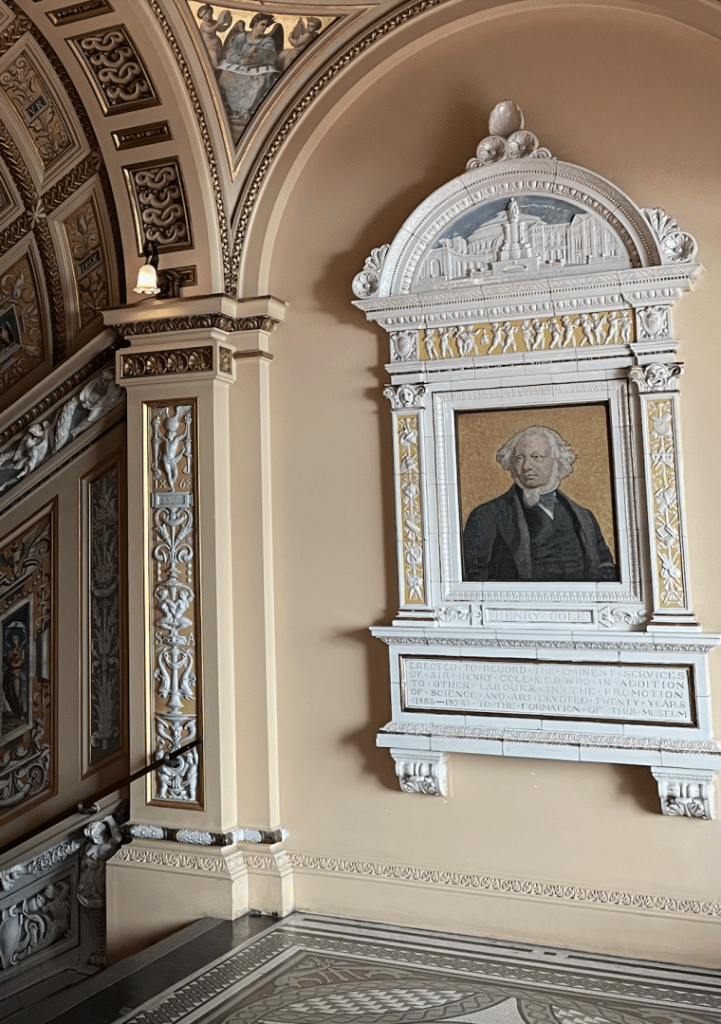
In July 1863 Cole wrote a letter to the journal of the Society of Arts (later the Royal Society of Arts or RSA) mentioning the parliamentary debate. He proposed that the RSA should take this scheme forward:
“It seems to me a proper subject for the Society of Arts to consider. The object in view is of public interest, and refers especially to celebrities in arts, science, manufactures, commerce and literature.”
Henry Cole’s blue plaque was erected in 1991 opposite the V&A.
The Treasurer of the RSA was a man called George Bartley, someone keen to preserve London’s history and who already concerned that too much of the city’s heritage was being torn down in the early 1860s. He commissioned the Staffordshire potter, Herbert Minton to create two blue, circular ceramic plaques.
One was for the birthplace of Lord Byron on Holles Street and the other for Napoleon III who lived for a time on King Street.
These were erected in 1867 as London’s first blue plaques but now only one survives.
If you want to find London’s oldest blue plaque you just need to look up at 3 King Street in St James’s.
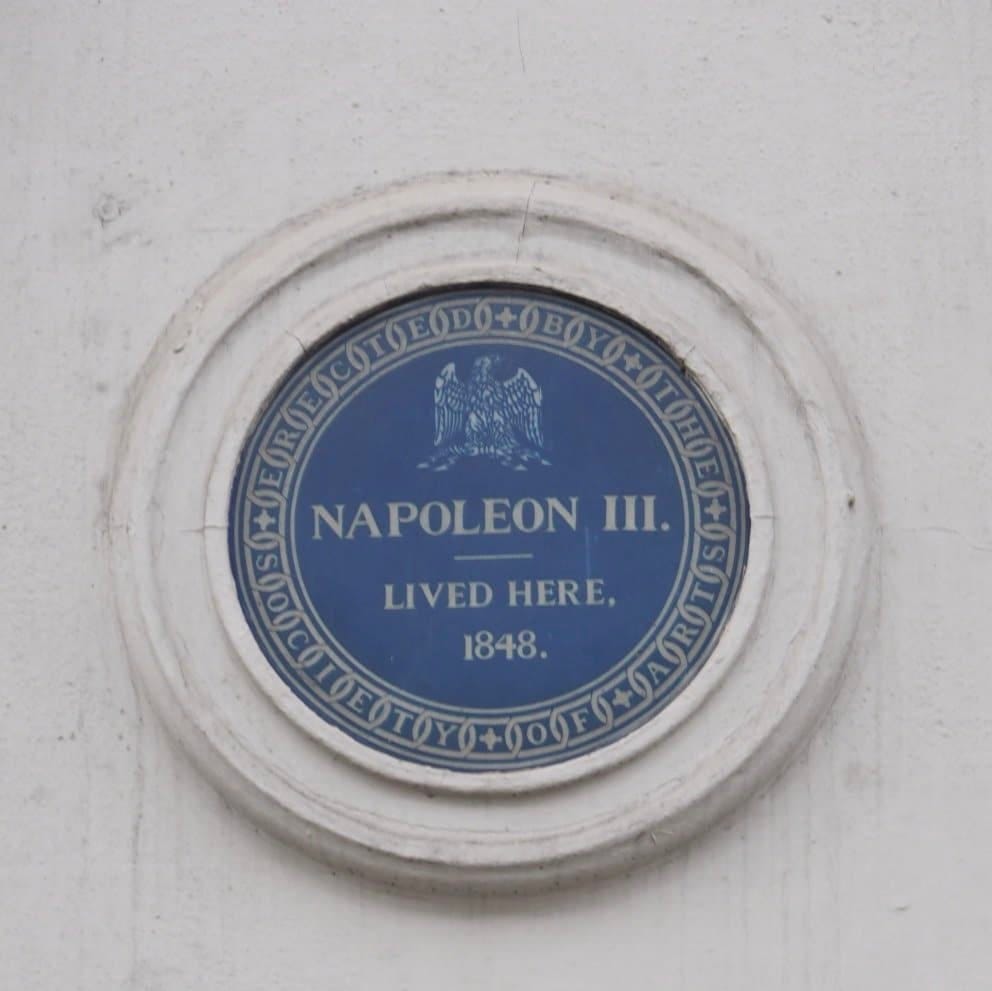
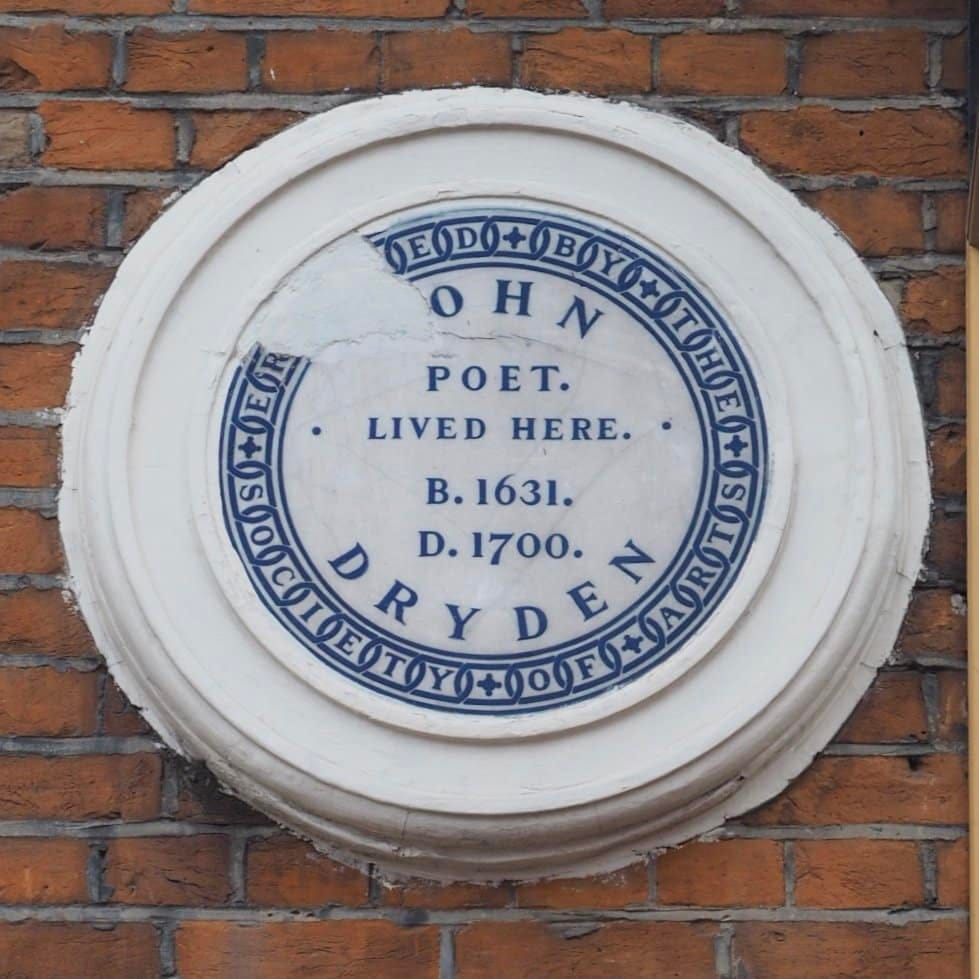
The RSA managed the blue plaque scheme until 1901 but their plaques weren’t always blue, in fact the majority of the 35 erected were a terracotta brown.
You can easily identify the RSA plaques, not only by their matte finish but by the decorative edging that spells out ‘Erected by The Society of Arts’ interspaced with interlaced curved lines and little crosses.
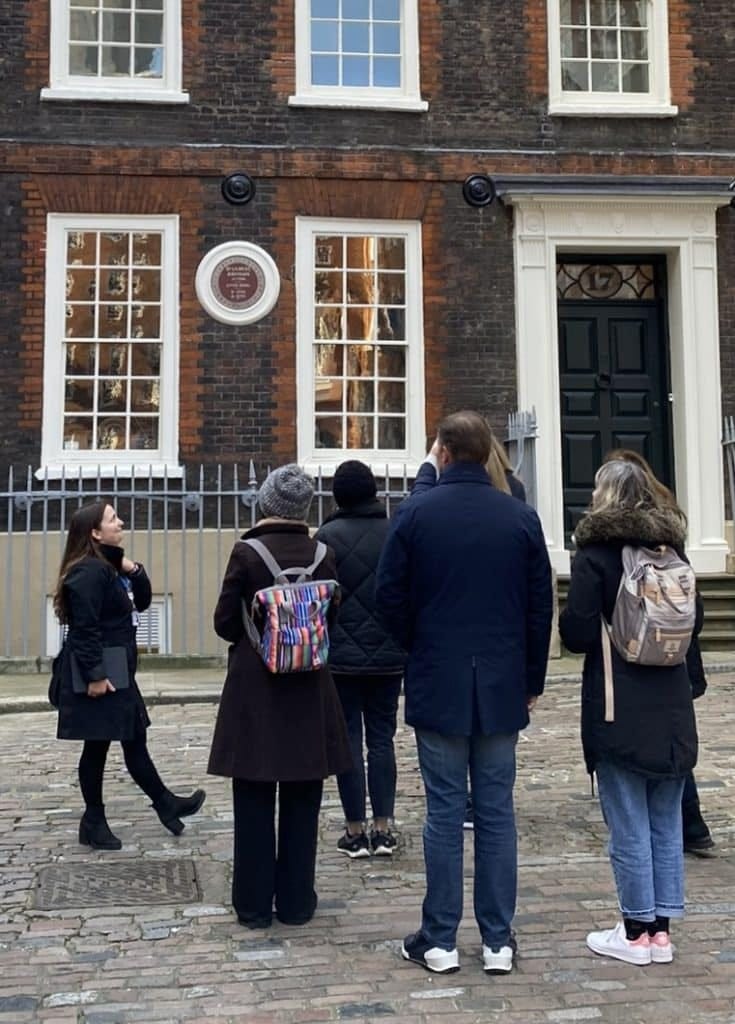
A brown plaque for Dr Samuel Johnson was erected in 1876 at 17 Gough Square, one of the people originally suggested by William Ewart back in 1863.
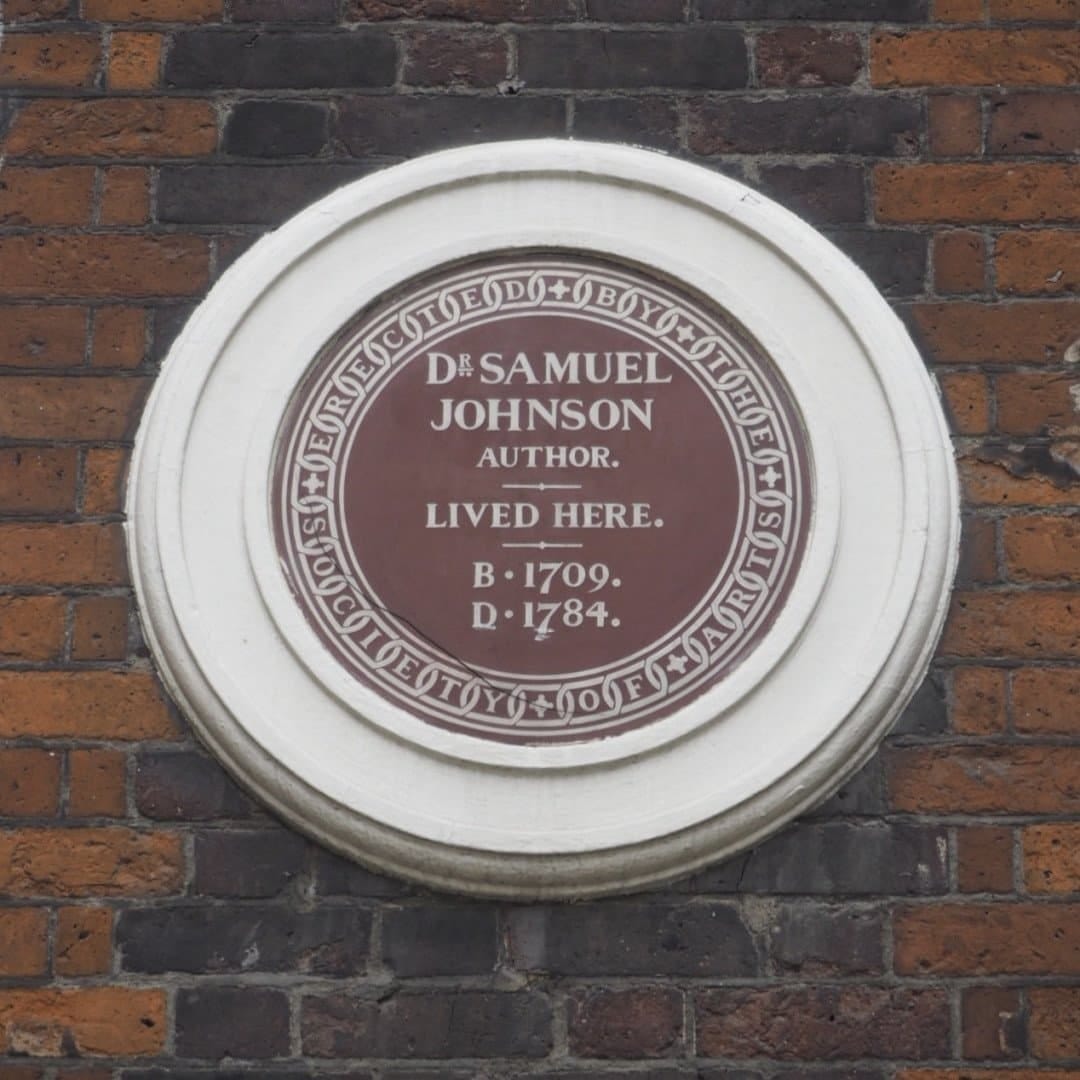
This plaque off Fleet Street is also unique because it’s the only official blue plaque within the Square Mile.
City of London Plaques
True to form, The City of London decided around 1879 that they would do things differently and manage their own scheme of plaques.
City of London plaques are still blue, but square and they tend to focus more on former buildings and institutions over individuals.
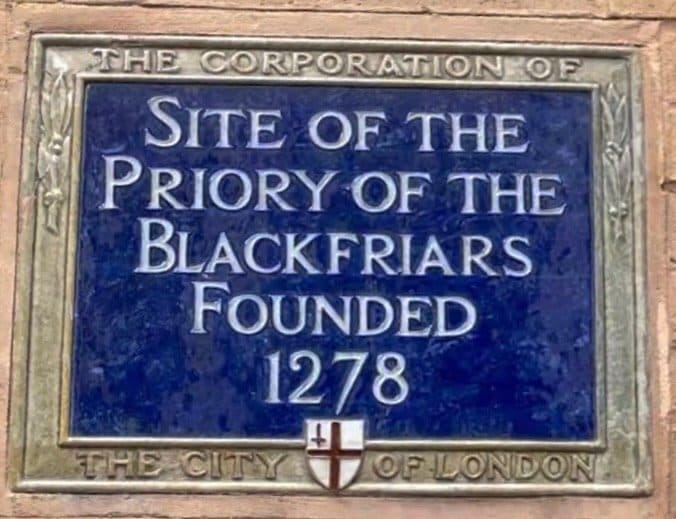
By my latest count there were 182 City of London plaques. Out of these only 38 commemorate actual people (with a whopping 3 of those being women).
If you’re curious as to which three women are commemorated, they are Elizabeth Fry, Susanna Wesley and Mary Harris Smith (the first woman to qualify as an accountant).
You can view an interactive map of the City of London Plaques here.
From 1901 a new body took over the running of the blue plaque scheme…
London County Council
The London County Council who were the local governing body for London from 1889 until 1965.
It was under them that the scheme really got going with hundreds of new plaques popping up across London.
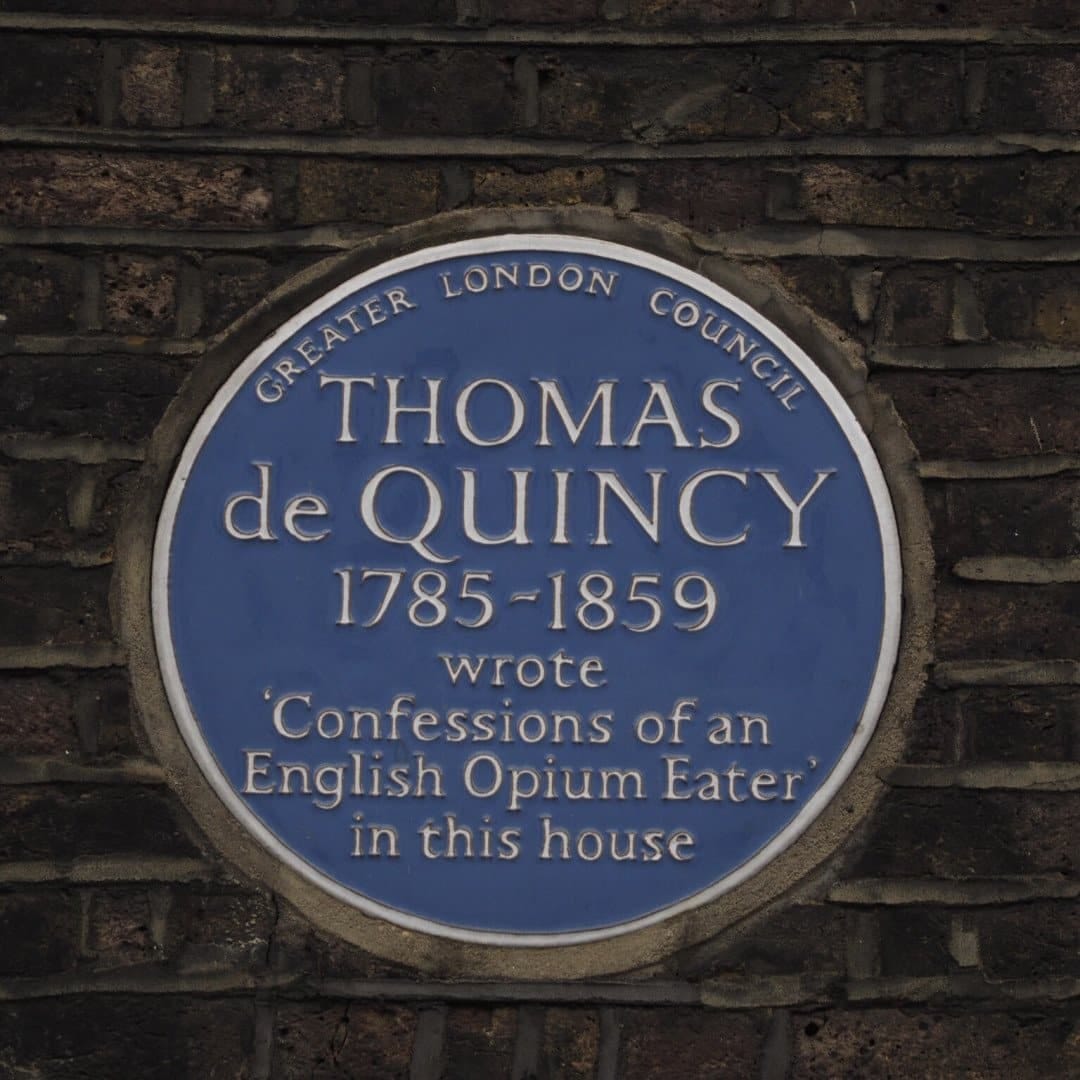
If you enjoy a bit of hard data, between 1903 and 1965 they erected 250 plaques and then under its new name (the Greater London Council) they put up a further 262.
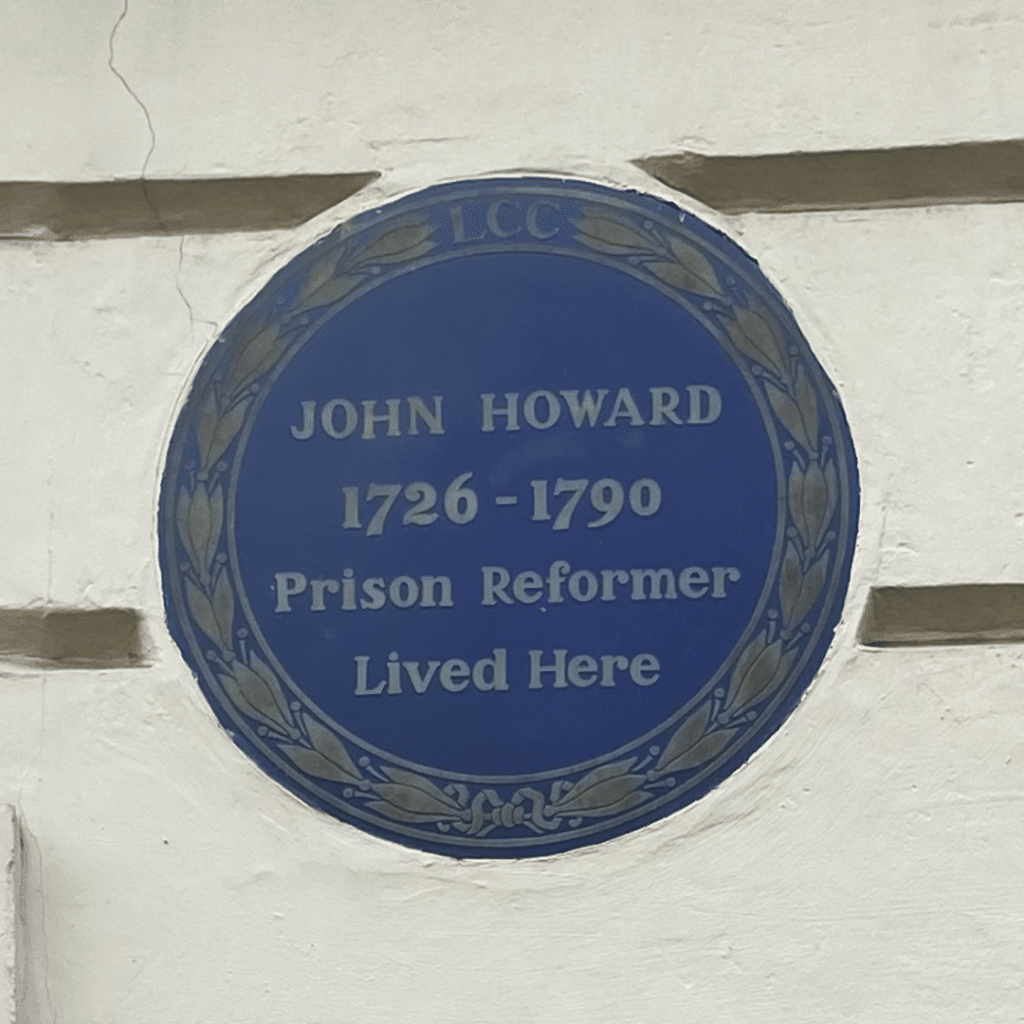
At first the LCC have a similar design to the RSC plaques, with a decorative border and then the initials LCC at the top.
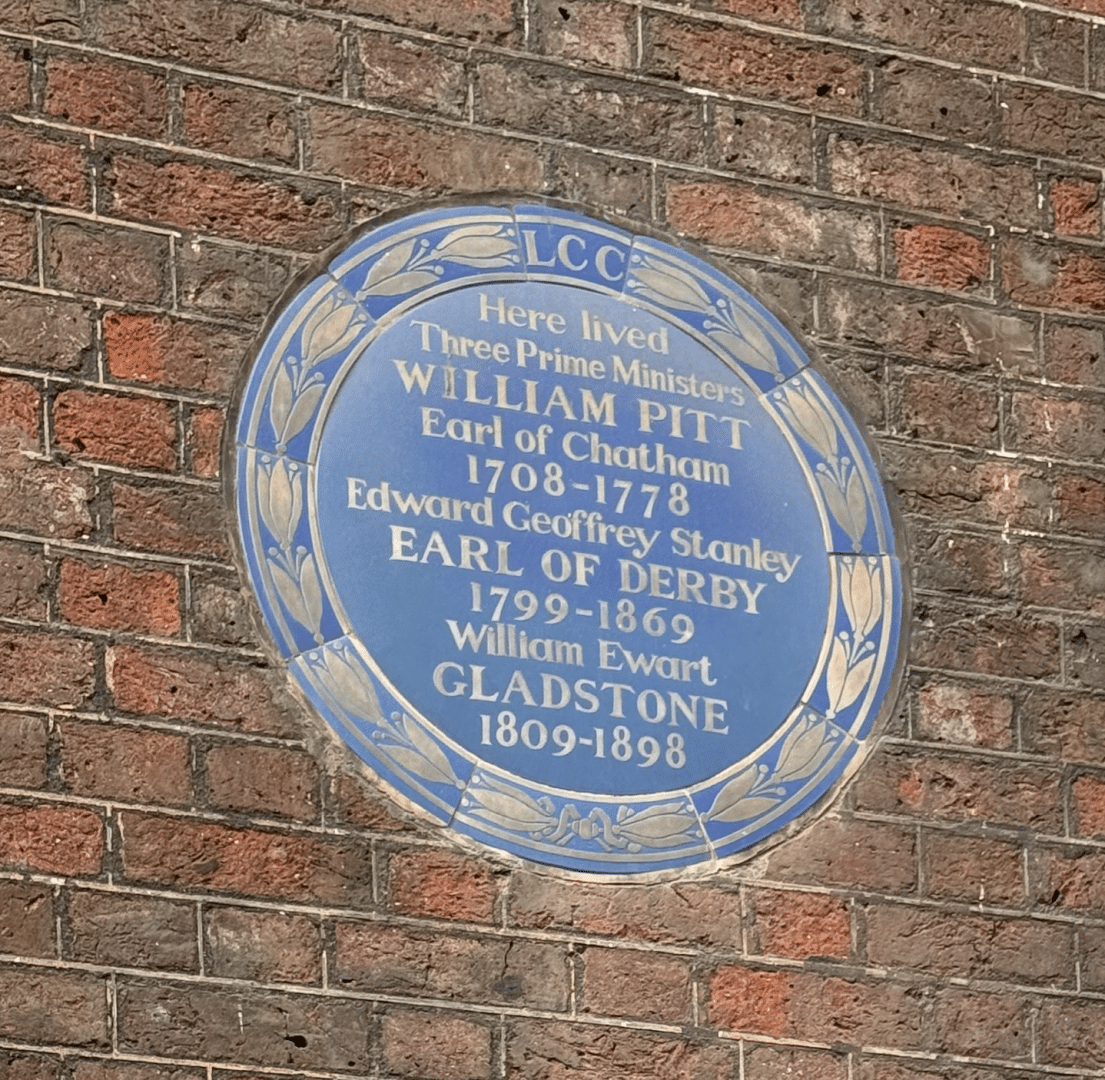
They also experimented with a few different designs, one of the prettiest can still be found on Beak Street in Soho
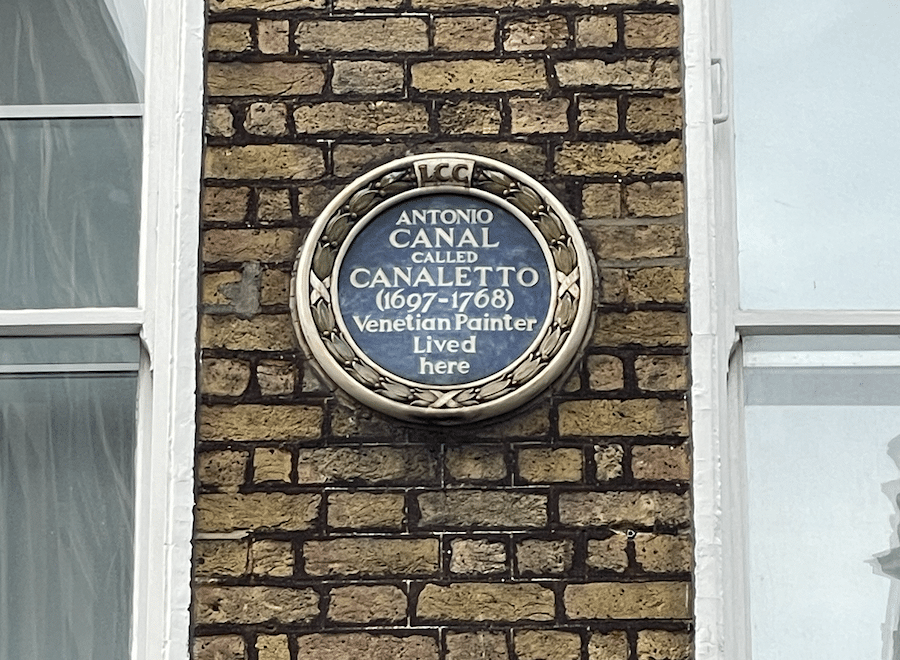
Over time the LCC and and then GLC blue plaques start to appear much more uniform.
They have the brighter blue colour and sheen as well as a more standardised format for the text. Typically it has the person’s name and their dates alongside a few words to describe them underneath.
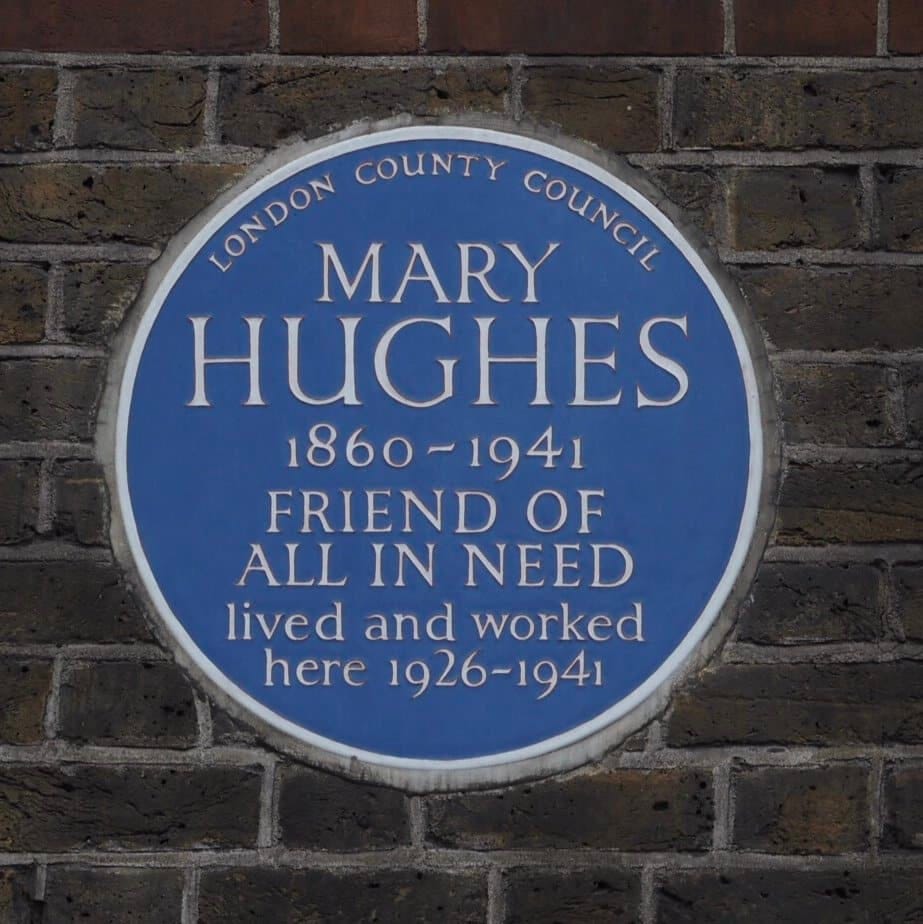
As blue plaques proliferated across the capital so did their prestige and power.
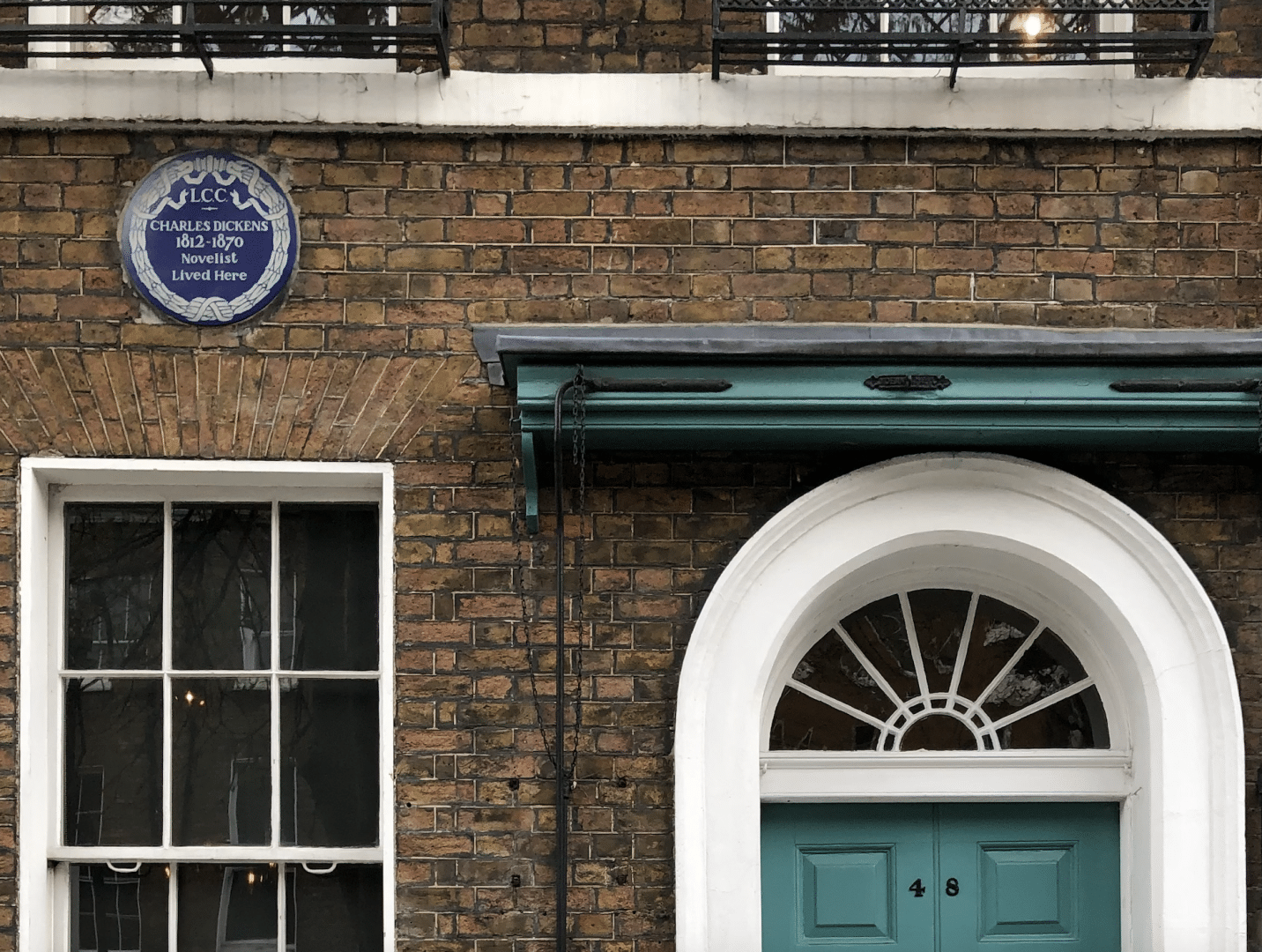
At 48 Doughty Street today you can find the Charles Dickens Museum. In 1903 a LCC plaque was unveiled on the writer’s former home well before it became a museum (in 1925) and probably helped save the home from major renovation.
In the cases of blue plaques for Vincent Van Gogh, Oscar Wilde and D.H. Lawrence all helped to ensure that the homes were preserved for posterity rather than face demolition.
One of my favourite plaques from the Greater London Council era is Edward Johnston’s plaque in Chiswick. Look properly and there’s something off about it.
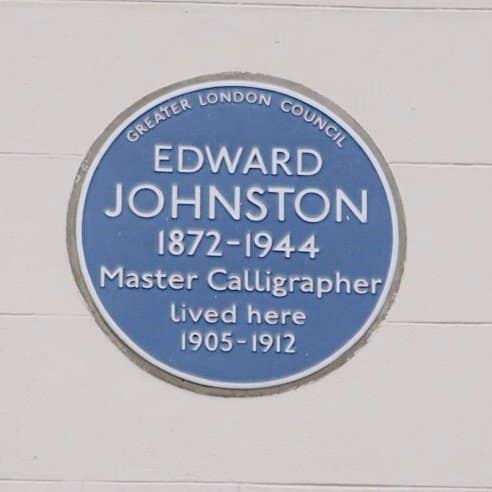
It was Johnston that created the famous typeface still used by Transport For London today and this is the only plaque that uses that special font!
But another great one to spot arrives in 1986, when one of the final blue plaques they unveiled was to… themselves!
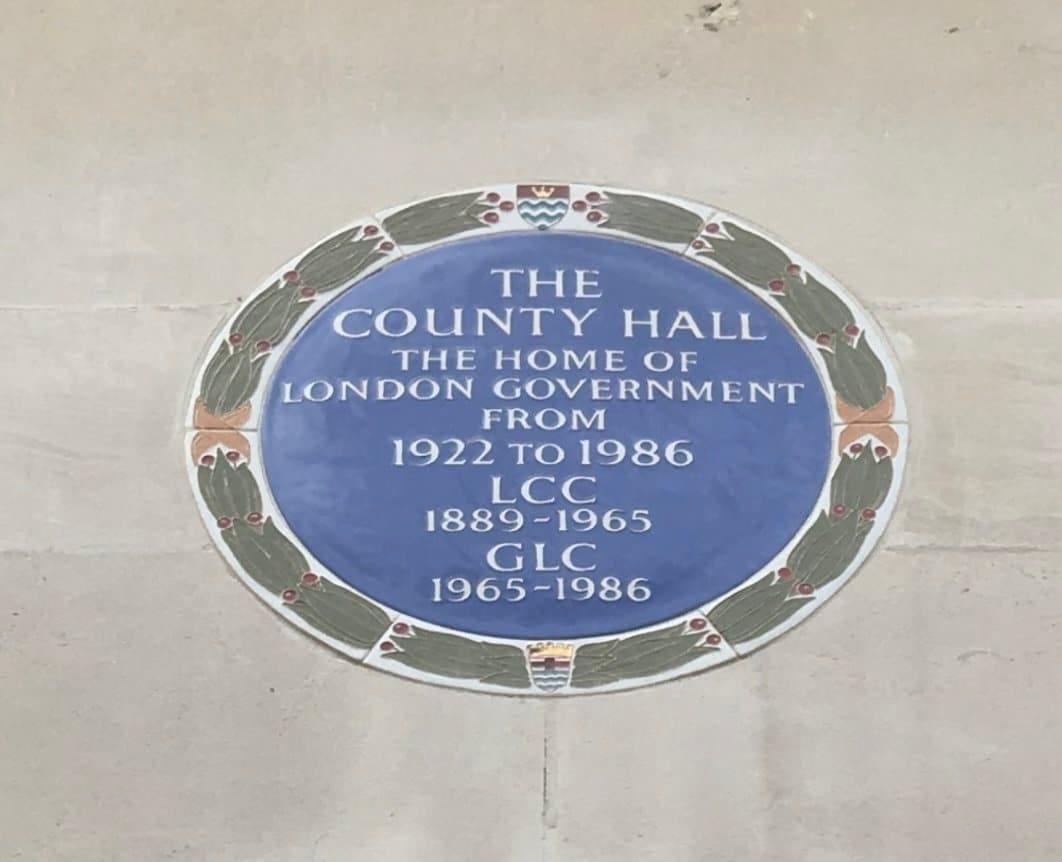
An unusual design with an extra decorative border on County Hall.
English Heritage
Since 1986 the Blue Plaque Scheme has been managed by English Heritage, where often you can spot their logo at the bottom.
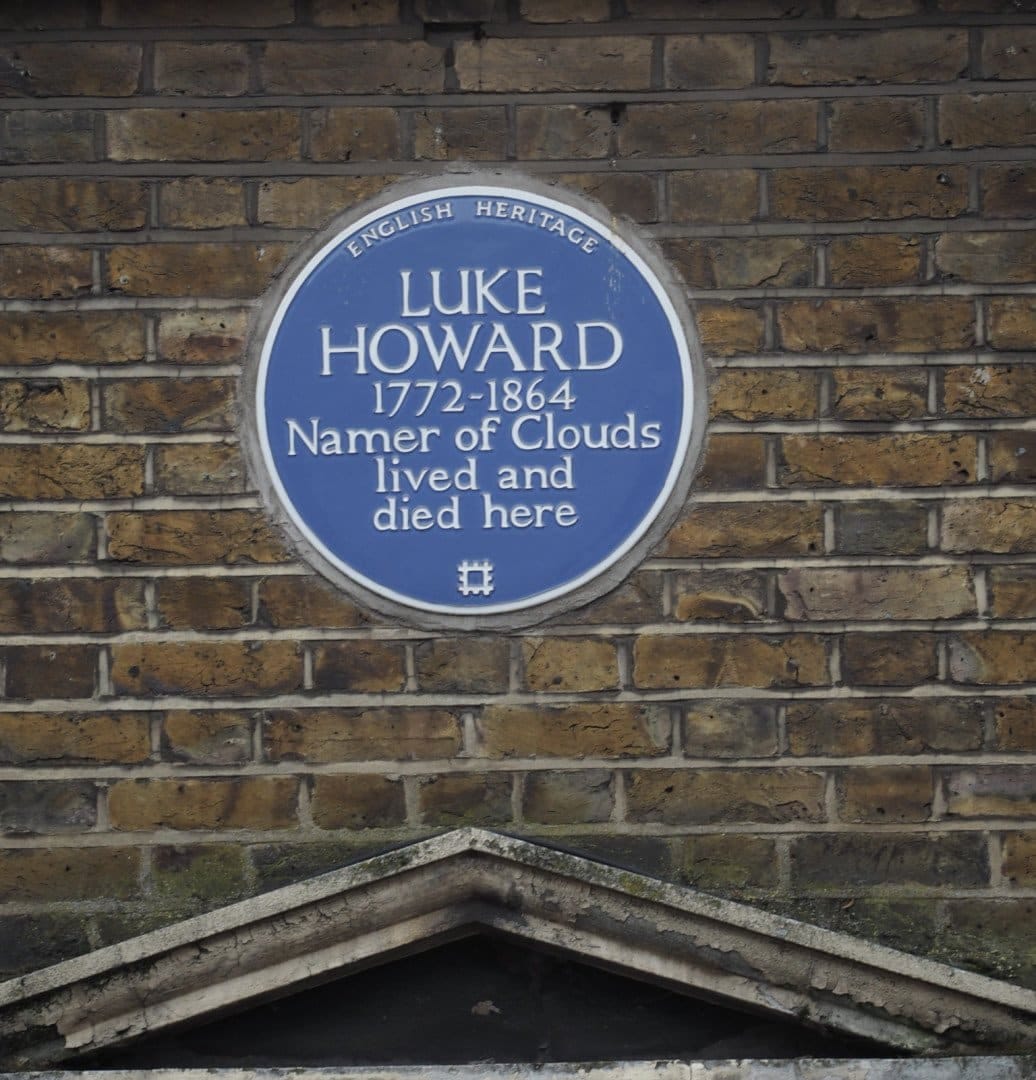
Today all English Heritage blue plaques are still made by hand. For over 40 years they were made by Frank and Sue Ashworth but Sue sadly died in 2026. You can watch a lovely video of them working on the plaque for Freddie Mercury here.
The immense task and privilege now falls to Ned Heywood and Julia Land from Ned Heywood Heritage Ceramics. Since 2018 they have been making ceramic plaques from their base in Chepstow.
In the decades that English Heritage have managed blue plaques, they’ve erected hundreds more plaques across London and now there are well over 1,000 total.
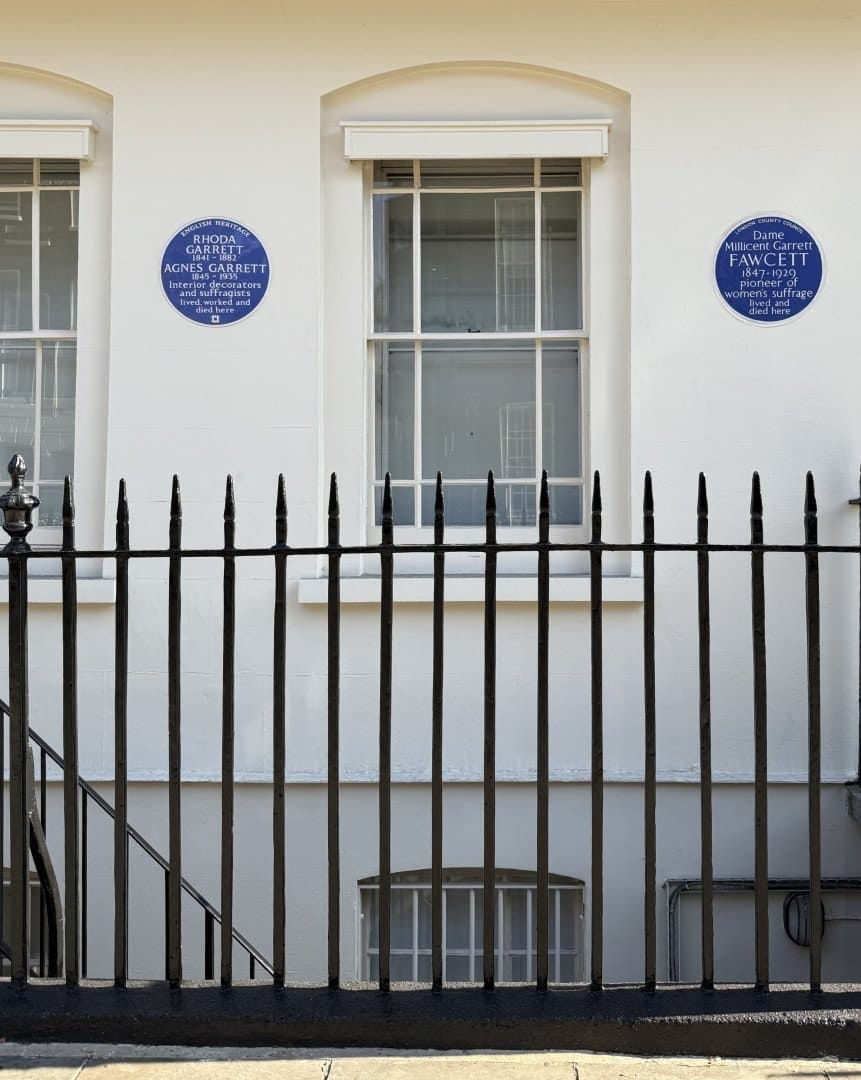
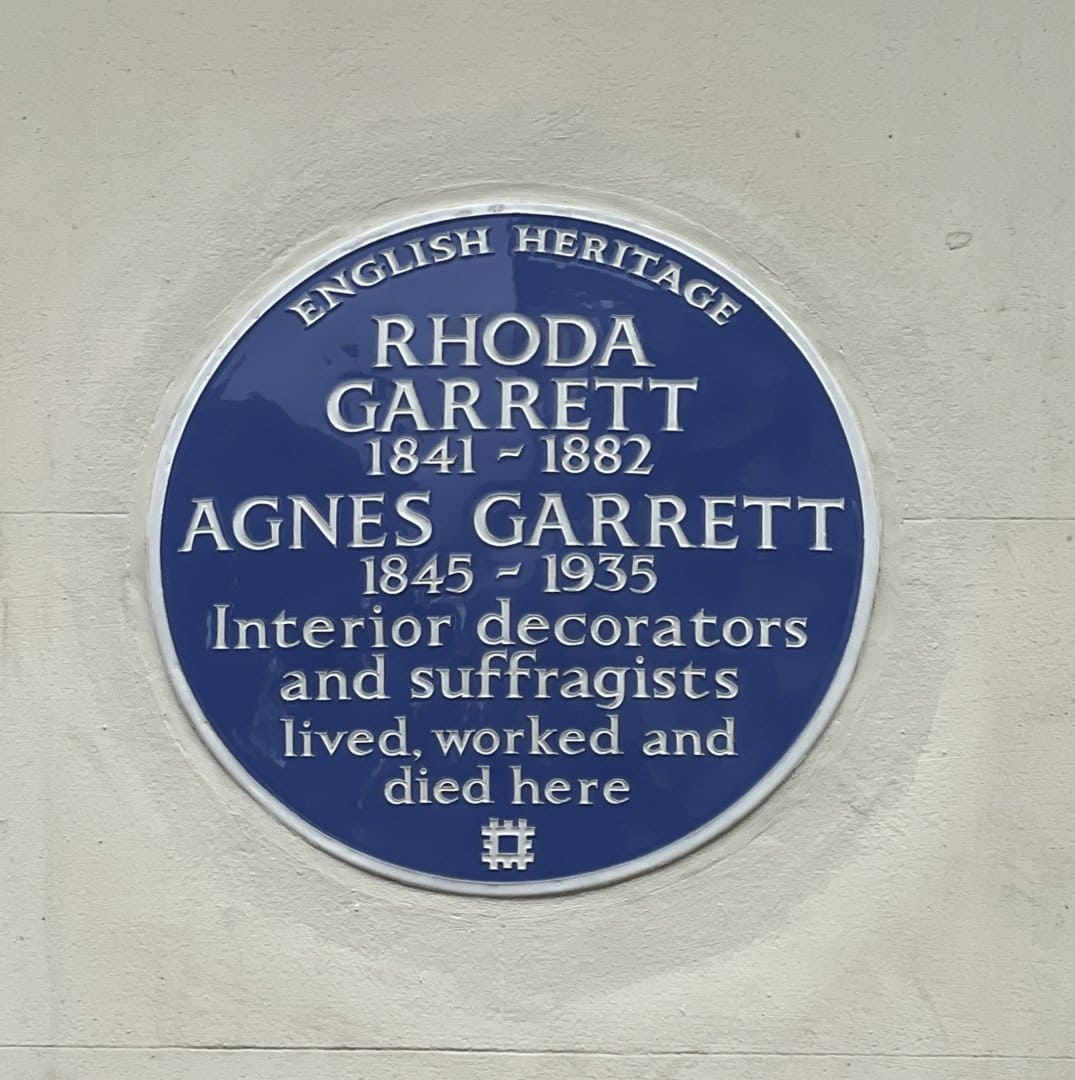
In recent years they’ve concentrated on honouring a more diverse selection of Londoners. In 2016 less than 4% of plaques represented Black or Asian people and only 15% of the total number of plaques were for women and you can read more about their plans on the English Heritage website here.
Who Gets a Blue Plaque?
Anyone can nominate a person to receive an English Heritage blue plaque.
These proposals are considered by a panel, but the general rules are that 1) the person has to have been dead for 20 years and 2) they have made a ‘positive contribution to human welfare and happiness’.
It’s also important that the person commemorated has a longstanding association with the building (they didn’t just stay overnight one time!) and it helps if the building is the original.
You can read more about submitting a blue plaque request here.
Green and other ‘Unofficial’ Plaques
It’s not just the City of London that wanted to celebrate local history via their own scheme.
Many other London boroughs or independent societies have their own versions and English Heritage lists 32 different schemes from which here are just a few examples of the variety you can find across London.
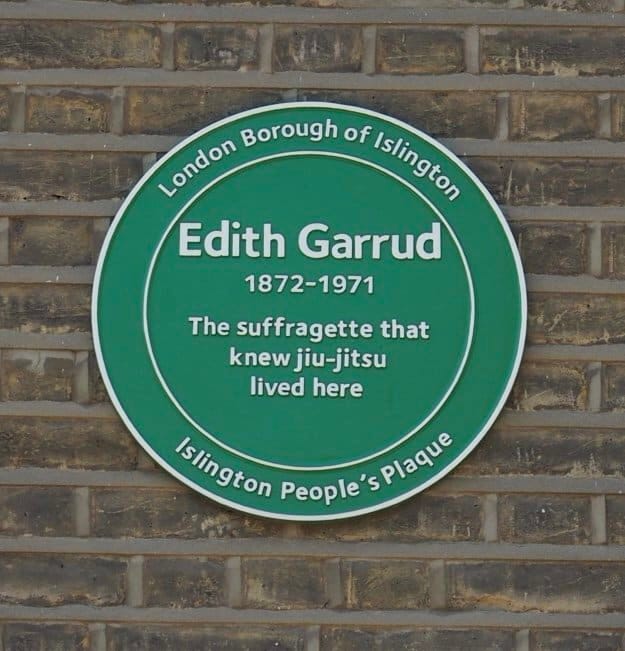
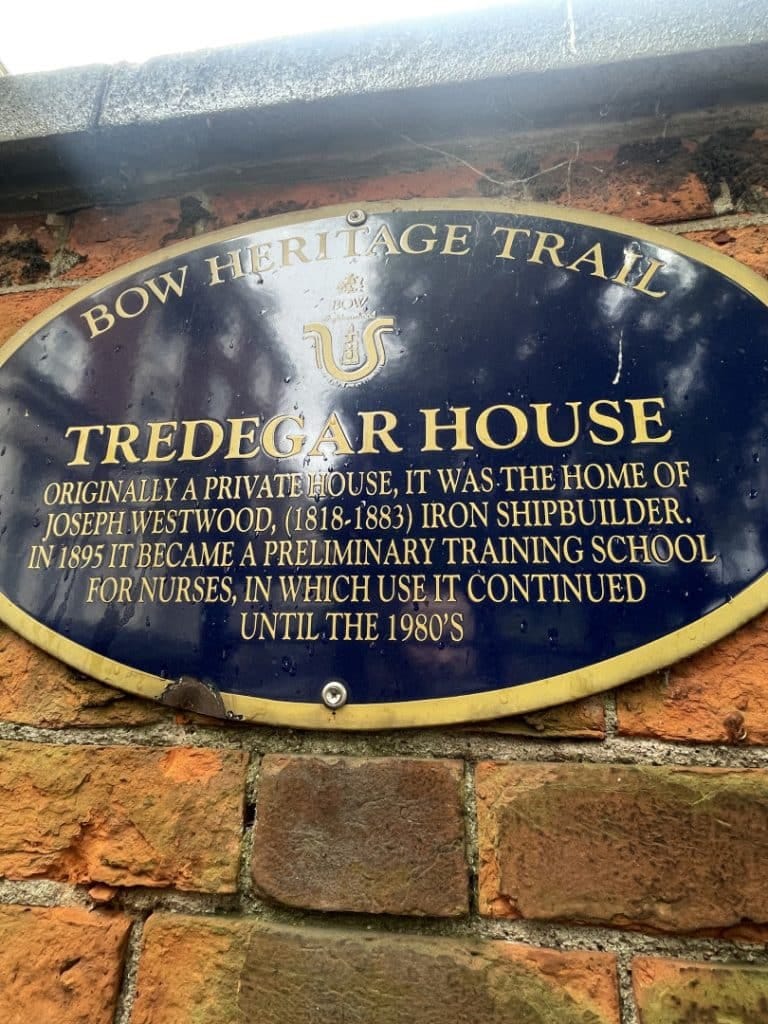
The City of Westminster launched their own scheme in 1991 with the criteria of being eminent, deserving of recognition and reasonably well known. Like English Heritage there also has to have been a sufficient amount of time since their death to ensure their lasting legacy.
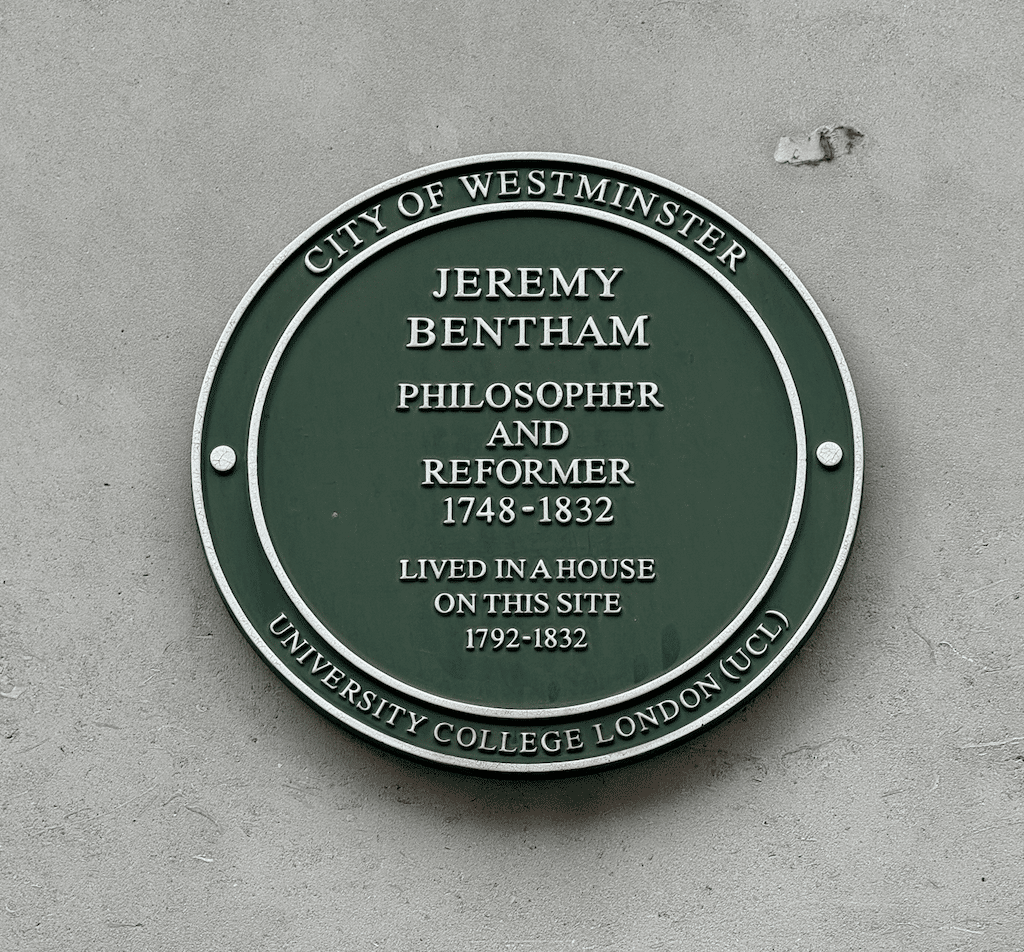
Many of the Westminster plaques are sponsored, the main sponsor being named at the bottom of the plaque. It costs around £4,200 to sponsor a plaque (once you’ve successfully passed the application).
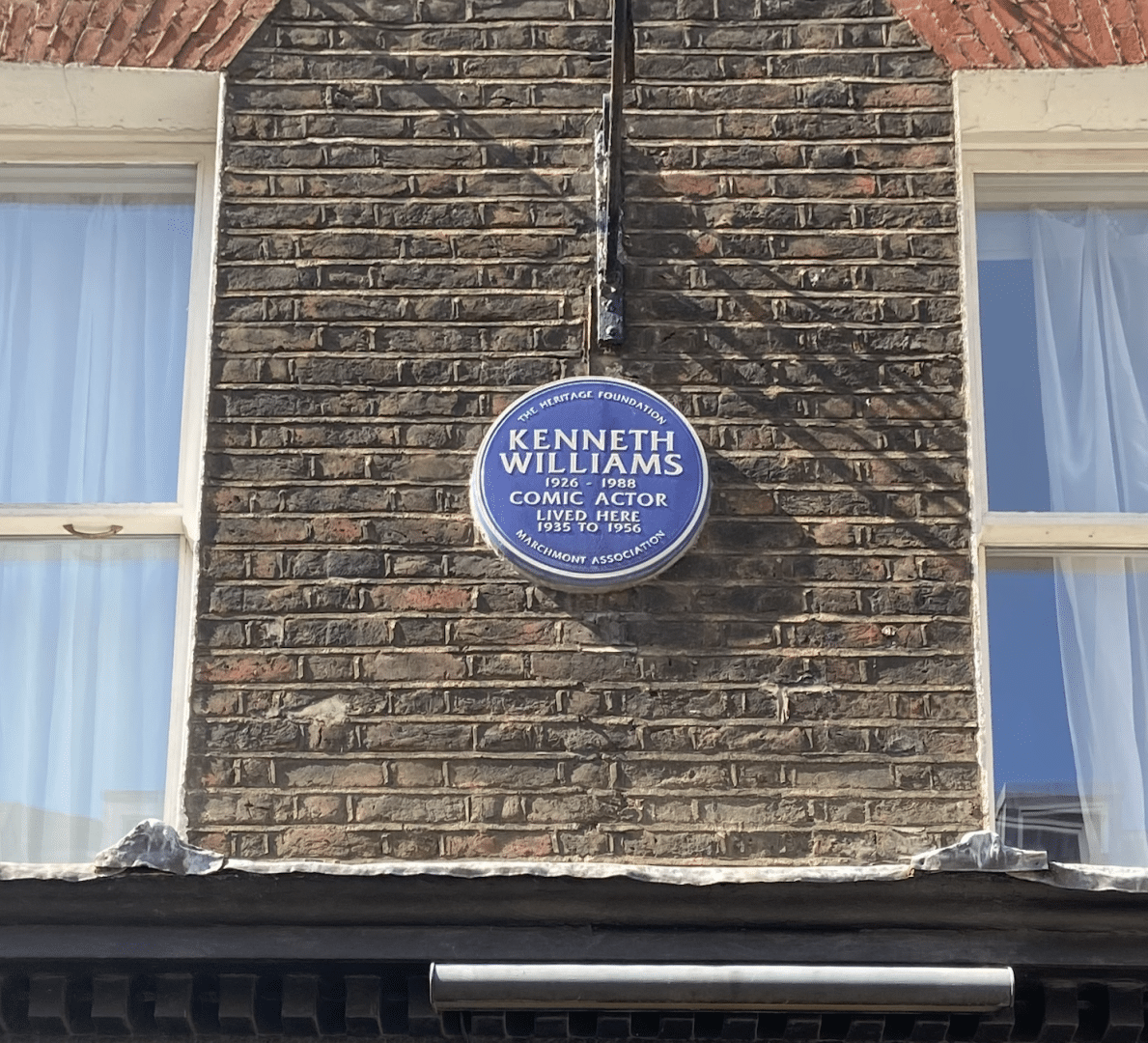
It doesn’t have to be whole boroughs that organise a plaque scheme, sometimes it’s a tiny local community such as with the Marchmont Association centred around Marchmont Street in Bloomsbury.
And often an institution might just focus on creating one single plaque in London, like the one commemorating Dr John Snow outside the pub named after him in Soho.
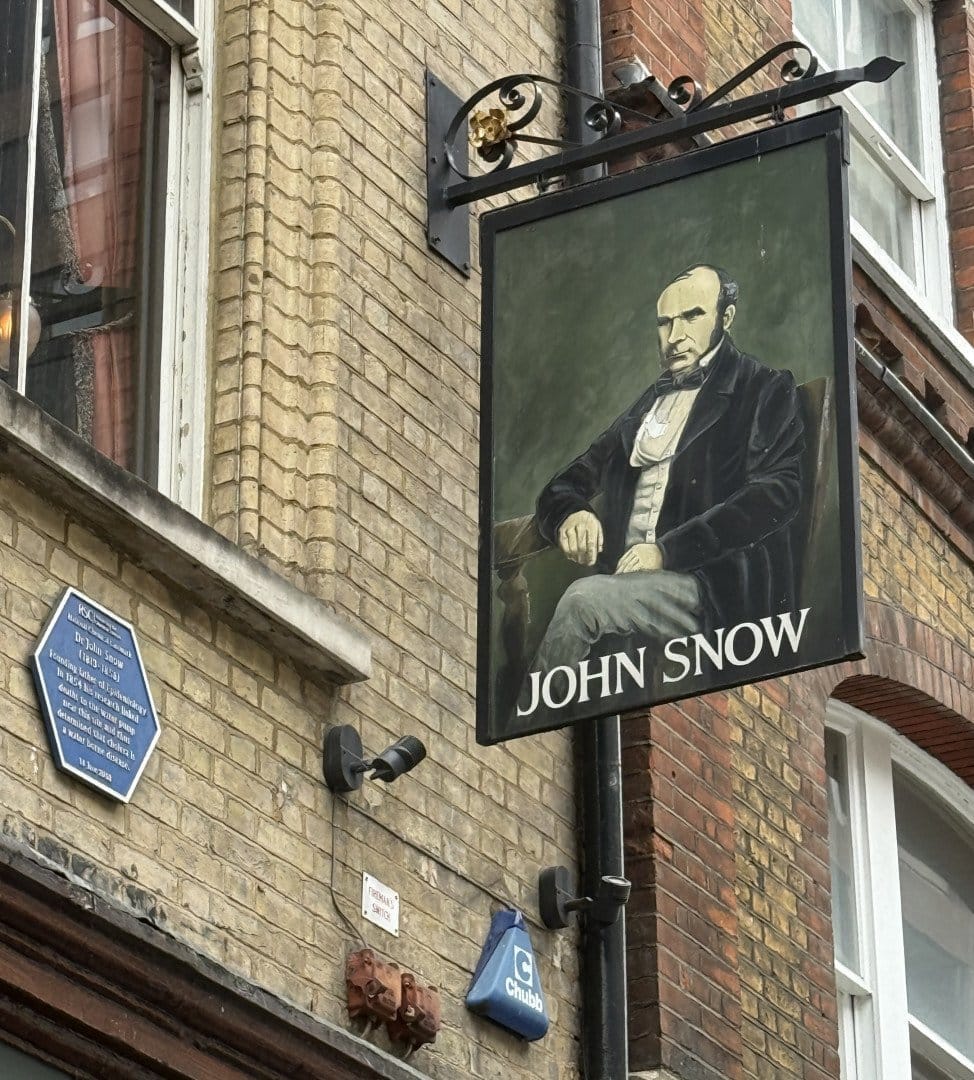
Do you have a favourite blue plaque (or any other colour or style for that matter?)
Let me know in the comments!


I’m still keeping my eyes open for blue plaque around London and the rest of the UK. I spotted George Orwell’s plaque and found Al Bowlly’s. In the gift shop at Dover Castle the have blue plaque plates, I bought one with Agatha Christie’s name on it.
Spent several years vounteering with The Heritage Foundation for their sport & music events -usually the unveiling of a blue plaque followed by a luncheon with friends & family of the honoree(s). Those were good times. Made several friend, to boot!